Stairlift Installation: What to Expect From Start to Finish
One of the most common worries people have about getting a stairlift is the installation itself. Will it be messy and disruptive? Will it damage the staircase or the walls? How long will the house be turned upside down? These are understandable concerns — but the reality is far simpler and far less disruptive than most people expect.
Stairlift installation is a clean, professional, and surprisingly quick process. For a straight staircase it can often be completed in just a few hours, with no structural changes to your home. By the time the technicians leave, you have a fully working lift and a clear understanding of how to use it safely.
In this guide we walk you through exactly what to expect, step by step, from the first phone call to the moment you take your first ride. Knowing what happens at each stage takes away the uncertainty and lets you plan with confidence.
Step 1: The Initial Enquiry
Everything begins with a simple enquiry. You get in touch to explain your situation — who the lift is for, the kind of staircase you have, and any particular needs or concerns. This first conversation helps establish the basics and answer any early questions you might have.
You do not need to have all the answers at this stage. The purpose is simply to start the process and arrange the next step: a proper assessment of your staircase. You can begin by requesting a free quote or by contacting the team directly.
Step 2: The Free Site Assessment
This is one of the most important steps. A trained assessor visits your home to look at the staircase in person. Measurements alone cannot capture everything, which is why an on-site visit matters so much. During the assessment, they will:
- Measure the staircase precisely — length, width, angle, and any turns or landings
- Identify the right type of lift — straight or curved — based on the staircase shape
- Discuss the user's needs — mobility, weight, height, and any features that would help
- Check practical details — the position of doorways, the nearest plug socket for charging, and any obstacles
- Answer your questions and explain the options clearly
This assessment ensures the lift will fit perfectly and suit the user. If you are unsure whether you need a straight or curved model, our guide on straight vs curved stairlifts explains the difference.
Step 3: The Quote and Decision
After the assessment, you receive a clear, itemised quote based on your specific staircase and chosen options. A good quote spells out exactly what is included — the unit, the rail, installation, demonstration, and warranty — so there are no surprises.
You then have the time and space to make your decision without pressure. This is the point to ask any final questions, confirm the features you want, and discuss timing. For more on what affects the figure, see our guide on how much a stairlift costs in South Africa.
Step 4: Manufacturing (for Curved Stairlifts)
If you are having a straight stairlift, this step is usually skipped — the rail is a standard track cut to length, so installation can follow quickly. For a curved stairlift, however, the rail must be custom-manufactured to match the exact shape of your staircase.
Using the precise measurements taken during the assessment, your bespoke rail is built to follow every bend and turn perfectly. This is what allows a curved lift to carry the user smoothly around corners in one continuous journey. There is a lead time for this manufacturing, which your supplier will explain, but it is what guarantees a precise, safe fit.
Step 5: Installation Day
This is the day the lift is fitted — and it is far less disruptive than most people imagine. Here is what happens:
Fixing the rail
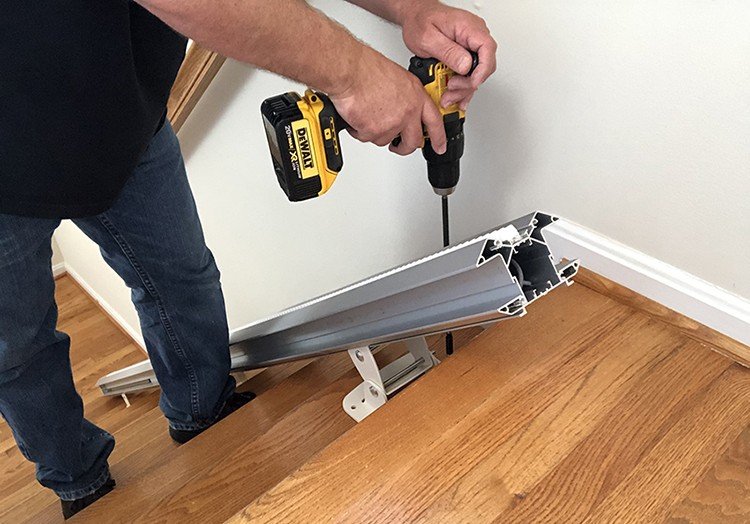
The rail is fixed securely to the stair treads — the steps themselves — not to the wall. This is a key point that reassures many homeowners: there is no structural damage to your walls, and no need for major building work. The fixing points on the treads are small and can be repaired easily if the lift is ever removed.
Fitting the chair and components
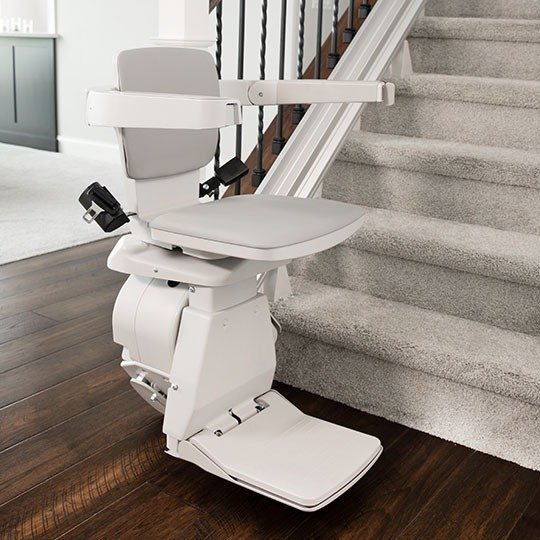
Once the rail is in place, the chair, motor, and controls are fitted and connected. The lift is positioned to leave as much of the staircase clear as possible for other family members.
Connecting the charging points
The charging points are set up at the top and bottom of the rail, plugged into a standard household socket. Because modern lifts are battery-powered, no special wiring or rewiring is needed — and the lift will keep working during load-shedding. We explain this in our guide on battery-powered stairlift chairs.
Testing
The technicians thoroughly test the lift — running it up and down the full length of the stairs (and around every bend, for curved models), checking the safety sensors, seat belt, swivel, and controls. Nothing is signed off until it is working perfectly and safely.
Step 6: Demonstration and Handover
Installation is not finished until the user knows exactly how to operate the lift safely and confidently. The technician will demonstrate everything:
- How to call the lift and operate the controls
- How to use the seat belt and swivel seat safely
- How to fold the seat, armrests, and footrest away
- What the safety features do and how they protect the user
- How the charging works and how to keep the battery topped up
- What to do in the unlikely event of a problem
The user (and any family members or carers) can practise using the lift until they feel completely comfortable. No question is too small — this handover is there to make sure everyone feels confident.
Step 7: Aftercare and Servicing
A reputable installation does not end the moment the technicians leave. Ongoing aftercare keeps your lift safe and reliable for years. This typically includes a warranty on the unit and the work, the option of regular servicing, and support if you ever have a question or concern.
Regular servicing is well worth it — it catches any wear early, keeps the lift running smoothly, and includes battery checks. You can read about the experiences of other customers on our testimonials page.
Will Installation Damage My Home?
This is the question we hear most, so let us be completely clear: no, a properly installed stairlift does not damage your home. Because the rail fixes to the stair treads rather than the walls, there is no structural impact. The fixing points are small and discreet, and if the lift is ever removed, they can be repaired easily, often leaving little or no visible trace.
There is also no need for rewiring, building work, or any major alteration to your home. This is one of the reasons stairlifts are such a practical solution — they deliver a huge improvement in safety and independence with minimal impact on the property.
Frequently Asked Questions
How long does stairlift installation take?
A straight stairlift is often installed in just a few hours. A curved stairlift takes a little longer due to the custom rail, but the on-site installation is usually completed within a day.
Does installation damage the stairs or walls?
No. The rail fixes to the stair treads, not the walls, so there is no structural damage. The small fixing points can be repaired easily if the lift is ever removed.
Do I need special electrical work done?
No. Modern stairlifts are battery-powered and charge from a standard plug socket, so no rewiring is needed. They also keep working during load-shedding.
Can I use my stairs normally while the lift is installed?
Yes. The lift folds away neatly when not in use, leaving the staircase clear for other people to walk up and down as normal.
Can the lift be removed later?
Yes. Stairlifts can be removed if no longer needed, and the small fixing points on the treads repaired. A straight lift may even be reinstalled in another home with similar stairs.
Final Thoughts
Stairlift installation is nothing to worry about. From the first enquiry to the final demonstration, it is a clean, professional, and well-managed process designed to cause as little disruption as possible. For most homes — especially those with a straight staircase — the lift is fitted, tested, and ready to use within hours, with no damage to the property.
The whole process begins with a simple, free assessment of your staircase. From there, an expert guides you through every step, so you always know what to expect and feel confident at each stage.
Ready to take the first step?
Book a free, no-obligation site assessment and quote. We will measure your staircase, recommend the right lift, and explain exactly what installation involves.
Get a Free QuoteYou can also browse our full range of stairlifts or contact our friendly team with any questions about the installation process.
Stair Lift Chair is a South African supplier and installer of straight, curved, outdoor, and battery-powered stairlifts. Learn more about us.