Straight vs Curved Stairlifts: Which One Do You Need?
If you have decided that a stairlift is the right way to keep moving safely between the floors of your home, the next big question is which type you need. For most South African homes, the choice comes down to one fundamental thing: the shape of your staircase. Is it a single straight flight, or does it bend, turn, or curve along the way?
This one detail shapes almost everything else — the type of lift, how it is manufactured, how it is installed, and the price. Choosing the right one is not just about cost; it is about safety, fit, and getting a lift that works flawlessly for years.
In this guide we explain the real differences between straight and curved stairlifts, how to tell which your staircase needs, the pros and cons of each, and what to consider before you buy. By the end you will know exactly which type suits your home — and what to ask when you request a quote.
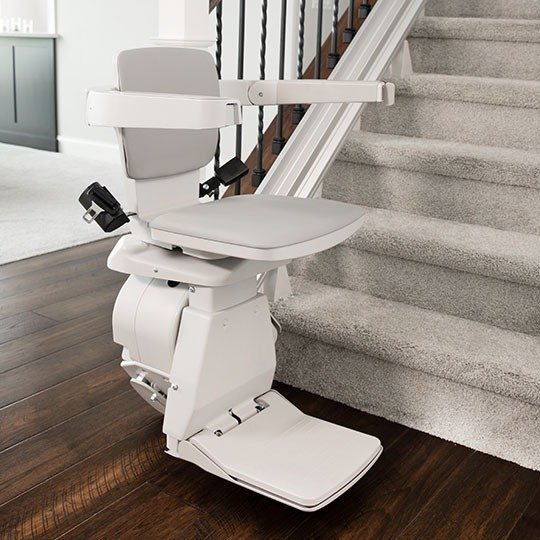
The Simple Difference Between Straight and Curved Stairlifts
At its heart, the distinction is easy to understand.
A straight stairlift is designed for a staircase that runs in one continuous, unbroken line from bottom to top, with no bends, turns, or landings in between. The rail is a single straight track.
A curved stairlift is built for any staircase that is not a simple straight flight. That includes staircases with a bend, a 90-degree or 180-degree turn, an intermediate landing, or a spiral shape. The rail for these lifts is custom-made to follow the exact path of your stairs.
Everything else — the chair, the safety features, the motor — works on broadly similar principles. It is the rail that makes the real difference, and that is where the two diverge in design, manufacturing, and cost.
You can explore both types, along with our outdoor and battery-powered options, on our products page.
How to Tell Which Type Your Staircase Needs
You do not need to be an expert to make an initial judgement. Stand at the bottom of your stairs and look up. Ask yourself:
- Does the staircase go straight up to the next floor with no turns? If yes, you almost certainly need a straight stairlift.
- Is there a bend, corner, or curve anywhere along the stairs? If yes, you need a curved stairlift.
- Is there a landing partway up where the stairs change direction? That counts as a turn — you need a curved stairlift.
- Do the stairs spiral around a central point? That is a curved (spiral) staircase, and it needs a fully custom curved lift.
A useful rule of thumb: if a long, straight pole could lie flat along your entire staircase without hitting a wall or turning, it is a straight staircase. If not, it is curved.
That said, the final word should always come from a professional site assessment. Some staircases look straight but have subtle features — a slight flare at the bottom, a doorway, or a narrow section — that affect which solution is safest and most comfortable. When you request a free quote, this assessment is part of the process, so you will know for certain.
Straight Stairlifts: Pros, Cons, and Who They Suit
The advantages
Straight stairlifts are the most popular and most affordable option, and for good reason.
- Lower cost. Because the rail is a standard track that can be cut to the length of your stairs, there is no custom manufacturing involved. This makes straight stairlifts considerably cheaper than curved models.
- Faster installation. With no bespoke rail to build, a straight stairlift can often be measured, delivered, and installed very quickly — sometimes within a matter of hours.
- Reconditioned options. Because the rail is standard, professionally refurbished (second-hand) straight stairlifts are widely available and can offer excellent value without compromising safety.
- Simplicity. Fewer custom parts can mean fewer things to go wrong, and straightforward servicing.
The considerations
- A straight stairlift only works on a genuinely straight flight. If your stairs turn at any point, it is not a safe or suitable option.
- If you have a landing, you would in theory need two separate straight lifts (one per flight) with a transfer in between — which is rarely practical or comfortable. In almost all such cases, a single curved lift is the better answer.
Who they suit
Straight stairlifts are ideal for the many South African homes with a simple, single-flight staircase between floors. If that describes your home, you benefit from the lowest cost and the quickest installation.
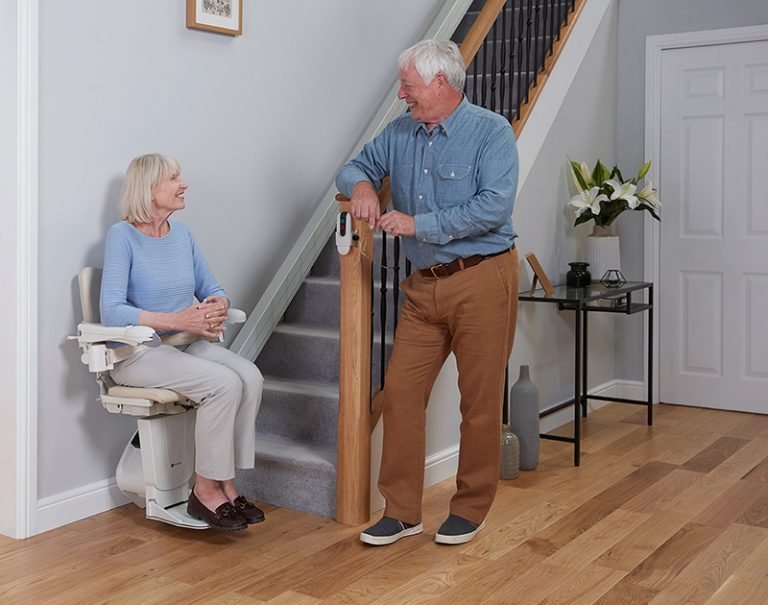
Curved Stairlifts: Pros, Cons, and Who They Suit
The advantages
Curved stairlifts are remarkable feats of engineering, designed to handle almost any staircase shape.
- They fit virtually any staircase. Bends, corners, half-landings, full landings, and spirals are all handled by a custom rail tailored to your exact stairs.
- Smooth, continuous travel. A well-designed curved lift carries the user seamlessly around corners and turns in one uninterrupted journey, with no need to get off and transfer.
- Made to measure. Because the rail is built specifically for your home, the fit is precise — hugging the staircase neatly and leaving as much space as possible for others to use the stairs.
- Can navigate to intermediate landings. If a family member needs to access a mid-level landing as well as the top floor, a curved lift can be designed to stop there too.
The considerations
- Higher cost. Each curved rail is custom-engineered and manufactured, which is the main reason curved stairlifts cost more than straight ones.
- Longer lead time. Because the rail must be manufactured to your measurements, there is usually a wait between ordering and installation, unlike the rapid turnaround of a straight lift.
- Smaller reconditioned savings. Even if a refurbished chair is used, the rail itself still has to be custom-built, so the savings on a curved lift are generally smaller than on a straight one.
Who they suit
Curved stairlifts are essential for any home where the staircase turns, curves, spirals, or has a landing. While they cost more, they are the only safe solution for these layouts — and they open up access in homes where a straight lift simply could not work.
Cost: The Honest Comparison
Cost is usually the deciding factor that worries people most, so let us be straightforward about it.
Straight stairlifts are the more affordable choice because of their standard, cut-to-length rail and quick installation. Curved stairlifts cost more — often significantly more — because every rail is custom-manufactured to match your staircase, and the design and installation work is more involved.
It is important not to see this as one being "better value" than the other. They serve different staircases. A straight lift is the right, cost-effective choice for straight stairs; a curved lift is the right (and only safe) choice for turning stairs. Paying more for a curved lift is not a premium for luxury — it reflects the genuine engineering required to keep the user safe around bends.
For a full breakdown of what drives stairlift pricing in South Africa, see our detailed guide on how much a stairlift costs. And when you are ready for a figure tailored to your home, request a free quote.
Installation: What to Expect for Each
Straight stairlift installation
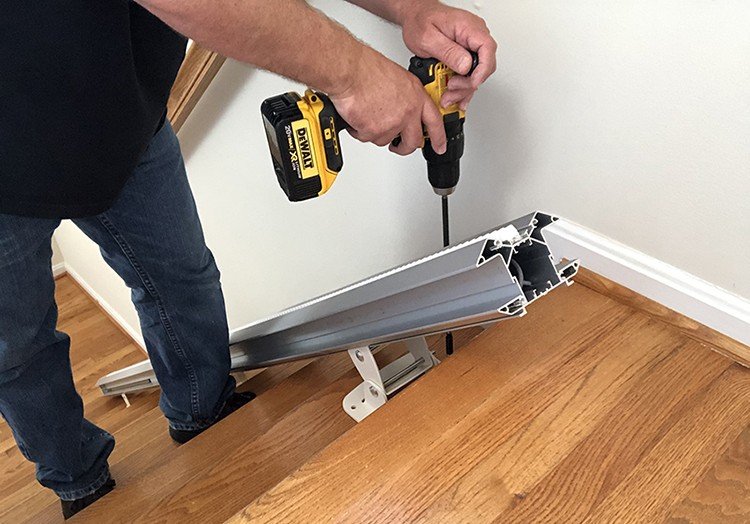
Installation is refreshingly simple. The rail is cut to size, fixed securely to the stair treads (not the wall, so there is no structural damage), and the chair is fitted and tested. Because no custom manufacturing is needed, the whole process is often completed in a single short visit.
Curved stairlift installation
The process begins with precise measurements of your staircase, often using digital tools to capture every angle and curve. These measurements are used to manufacture your bespoke rail. Once the rail is ready, technicians install it, fit the chair, and thoroughly test the lift around every bend. The on-site installation is typically completed in a day, though you should allow for the manufacturing lead time beforehand.
In both cases, professional installation by trained technicians is non-negotiable for safety. A correctly installed lift is a safe lift — this is never a job for DIY.
Features Available on Both Types
Whether you choose straight or curved, modern stairlifts share a range of safety and comfort features. When comparing options, look for:
- Battery power with backup, so the lift keeps working during load-shedding — a real benefit in South Africa
- Safety sensors that stop the lift if an obstacle is detected on the stairs
- Seat belts for secure travel
- Swivel seats that turn at the top for safe dismounting, available as manual or powered
- Folding seat, armrests, and footrest to keep the stairs clear for other users
- Remote controls to call the lift to either end
- Smooth start and stop for a comfortable ride
These features matter just as much as the rail type, so factor them into your decision and your quote.
How to Make the Right Choice
Bringing it all together, here is a simple way to decide:
- Look at your staircase. Straight flight with no turns? You need a straight stairlift. Any bend, landing, or curve? You need a curved stairlift. This is the deciding factor — the rest is detail.
- Consider the user's needs. Weight, mobility, and reach will guide which features and which seat type are best.
- Think about budget and timing. Straight lifts are cheaper and faster; curved lifts cost more and take longer to manufacture. If you have straight stairs and a tight budget, ask about reconditioned options.
- Get a professional assessment. A site visit confirms which type your staircase truly needs and catches any details you might miss.
The good news is that this is not a decision you have to get right alone. The shape of your staircase makes the basic choice for you, and a professional assessment confirms it. From there, it is about choosing the features that suit the user.
Frequently Asked Questions
Can a curved stairlift be used on straight stairs?
Technically yes, but it would be unnecessary and far more expensive. If your stairs are straight, a straight stairlift is the sensible, cost-effective choice.
What if my staircase has just one small bend at the bottom?
Even a single bend means you need a curved stairlift, because the rail must follow that curve. A straight rail cannot safely navigate any turn.
Do curved stairlifts take up more space?
Both types are designed to fold away neatly when not in use, keeping the stairs clear. A well-fitted curved lift hugs the staircase closely, so it does not have to take up significantly more room.
Is one type safer than the other?
No. Both are equally safe when correctly specified and professionally installed. The key is matching the lift to your staircase — a straight lift on straight stairs, a curved lift on turning stairs.
Can I move a stairlift to a new home later?
A straight stairlift can often be reinstalled in another home with a similar straight staircase. A curved lift's custom rail is built for one specific staircase, so it is much harder to transfer. Ask your supplier about your options.
Final Thoughts
Choosing between a straight and curved stairlift really comes down to one thing: the shape of your stairs. Straight staircases call for a straight stairlift — affordable, quick to install, and often available reconditioned. Turning, curved, or spiral staircases need a custom curved stairlift, which costs more but is the only safe way to carry someone around the bends.
Rather than worrying about which is "better," focus on which is right for your home. Once the staircase decides the basic type, you can choose the features that suit the user and enjoy safe, independent access to every floor.
Not sure which type your staircase needs?
Get a free, no-obligation quote. We will assess your stairs and recommend the right solution — straight or curved — for your home.
Get a Free QuoteYou can also browse our full range of stairlifts, read real customer testimonials, or contact our friendly team with any questions.
Stair Lift Chair is a South African supplier and installer of straight, curved, outdoor, and battery-powered stairlifts. Learn more about us.