Are Stairlifts Safe? Safety Features Explained
When you are considering a stairlift for yourself or a loved one, safety is naturally the first thing on your mind. After all, the whole point of a stairlift is to remove danger from the stairs — so it is essential that the lift itself is completely safe to use. It is a fair question to ask: are stairlifts actually safe?
The reassuring answer is yes. Modern stairlifts are among the safest mobility products available, built with multiple layers of safety features designed to protect the user at every moment of the journey. They are engineered specifically for older adults and people with reduced mobility, and they undergo careful testing and professional installation to ensure they perform reliably.
In this guide we explain exactly why stairlifts are safe, walk through each of the key safety features and what it does, and address the common safety questions people ask. By the end, you will understand precisely how a stairlift keeps its user protected.
Why Stairlifts Are Safe by Design
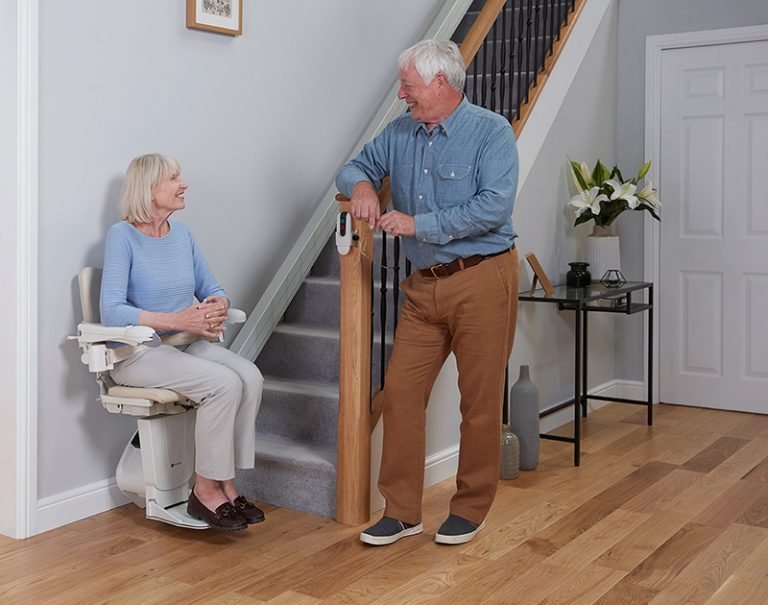
A stairlift's job is to carry a person safely up and down the stairs, and every aspect of its design serves that purpose. Rather than relying on a single safety measure, a stairlift combines several features that work together. If one feature is the seat belt that secures the user, another is the sensor that watches the stairs, and another is the smooth motion that prevents jolts — together they create a genuinely safe experience.
Stairlifts also remove the single biggest risk in the home for many older adults: climbing the stairs on foot. A fall on the stairs can cause serious injury, as we discuss in our guide on stairlifts for the elderly. By letting the user travel seated and secured, a stairlift eliminates that risk entirely. So the safety benefit is twofold: the lift itself is safe, and it protects the user from the far greater danger of the stairs.
The Key Safety Features Explained
Let us look at each of the main safety features found on a quality modern stairlift, and what each one does to protect the user.
Seat belt
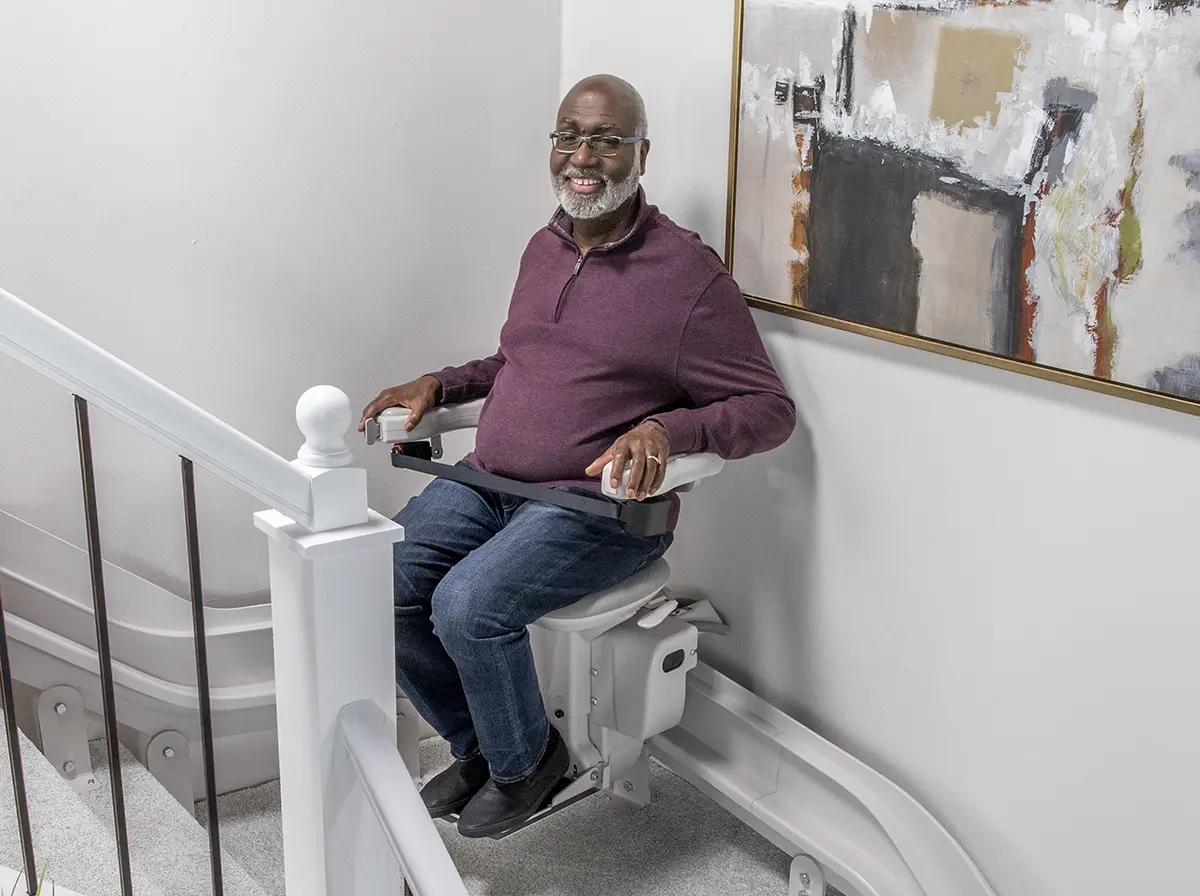
Just like in a car, the seat belt holds the user securely in place throughout the journey. It prevents any risk of slipping or leaning out and gives the user a reassuring sense of security. It is simple to fasten and release, and it is one of the most important safety features on the lift.
Safety sensors
Stairlifts are fitted with sensors on the chair and footrest that constantly monitor the stairs ahead. If they detect an obstacle — a pet, a dropped object, or anything in the path — the lift automatically stops. It will not continue until the obstruction is cleared. This protects both the user and anyone or anything on the stairs.
Smooth start and stop
A quality stairlift starts and stops gently, with no sudden jerks or jolts. This soft-start, soft-stop motion is important for older or frail users, who could be unsettled or hurt by abrupt movement. The ride is steady and controlled from beginning to end.
Swivel seat with safety lock
At the top of the stairs, the seat swivels to face away from the staircase so the user can stand up and step onto the landing safely, rather than twisting awkwardly at the edge of the steps. The swivel seat locks into position, so it stays secure while the user gets on or off.
Controlled, gentle speed
Stairlifts travel at a deliberately slow, controlled speed. There is never any rush — the lift moves at a pace that feels safe and comfortable, giving the user complete confidence throughout the journey.
Battery backup for power cuts
Because modern stairlifts are battery-powered, they keep working during load-shedding and power failures. This is a safety feature in itself: the user is never left stranded mid-flight or stuck on the wrong floor when the power goes out. We explain this fully in our guide on battery-powered stairlift chairs.
Safety brakes
Stairlifts are fitted with braking systems that hold the chair securely on the rail and prevent it from sliding or moving unexpectedly. The lift only moves when the user operates the controls, and it stays firmly in place otherwise.
Easy, intuitive controls
Simple controls are a safety feature too. Large, clearly marked buttons or an easy-to-use toggle mean the user can operate the lift confidently, even with reduced dexterity or eyesight. Many lifts also include a remote control to call the chair to either end of the stairs.
Key switch
Many stairlifts include a key switch that lets you lock the lift so it cannot be used without the key. This is especially useful in homes with young children or grandchildren, preventing unsupervised or unintended use.
Professional Installation: A Safety Essential
Even the best-designed stairlift is only as safe as its installation. This is why professional installation by trained technicians is absolutely essential, and never something to attempt as a DIY job.
A professional installer ensures the rail is fixed securely to the stair treads, the chair and components are correctly fitted, and every safety feature is tested and working before the lift is handed over. They also demonstrate safe use to the user. We walk through this whole process in our guide on what to expect from stairlift installation. Correct installation is the foundation that all the other safety features rest on.
Using a Stairlift Safely
The lift does its part, and a few simple habits from the user complete the picture. To get the safest possible use from a stairlift:
- Always wear the seat belt, every single journey, without exception
- Sit fully back in the seat with feet on the footrest before setting off
- Keep the stairs clear of objects that could trigger the sensors or cause a trip when not on the lift
- Use the swivel seat to get on and off safely at the top, rather than twisting
- Keep the lift charged by parking it at the charge point
- Keep up with servicing so all safety features stay in perfect working order
These habits are simple and quickly become second nature, ensuring the lift remains as safe as the day it was installed.
Are Stairlifts Safe for People with Specific Needs?
Stairlifts are designed to be safe for a wide range of users, including those with significant mobility challenges. Features such as powered swivel seats, powered footrests, supportive seating, and heavy-duty models with higher weight capacities mean a lift can be tailored to the individual. A proper assessment identifies exactly which features a particular user needs to travel safely and comfortably. If you are choosing for someone with specific requirements, our guide on how to choose the right stairlift can help.
Frequently Asked Questions
Can a stairlift fail and drop the user?
No. Stairlifts have braking systems that hold the chair securely on the rail at all times. The lift only moves when the controls are operated, and it cannot slide or fall.
What happens if there is something on the stairs?
Safety sensors detect obstacles and automatically stop the lift. It will not move again until the obstruction is cleared, protecting both the user and whatever is on the stairs.
Is it safe during load-shedding?
Yes. Battery power means the lift keeps working during power cuts, so the user is never left stranded mid-journey.
Are stairlifts safe around children?
Many lifts include a key switch that locks the lift, preventing children from using it unsupervised. The lift can be secured when not in use.
How do I keep a stairlift safe over time?
Regular servicing keeps all safety features in good working order. Combined with simple safe-use habits like always wearing the seat belt, this keeps the lift safe for years.
Final Thoughts
So, are stairlifts safe? Without doubt — yes. Modern stairlifts are engineered with multiple, overlapping safety features designed specifically to protect older adults and people with reduced mobility. Seat belts, sensors, smooth motion, locking swivel seats, brakes, battery backup, and simple controls all work together to make every journey secure.
Just as importantly, a stairlift removes the far greater danger of climbing the stairs on foot. When professionally installed and used with a few simple habits, a stairlift is one of the safest and most reassuring ways to keep moving freely between the floors of your home.
A safe, reliable way to stay mobile at home
Get a free, no-obligation assessment and quote. We will recommend a stairlift with the right safety features for the user — professionally installed and fully tested.
Get a Free QuoteYou can also browse our full range of stairlifts, read real customer testimonials, or contact our friendly team with any safety questions.
Stair Lift Chair is a South African supplier and installer of straight, curved, outdoor, and battery-powered stairlifts. Learn more about us.