Stairlifts for the Elderly: A Complete Guide for Families
Last updated: June 2026
Watching a parent or grandparent struggle with the stairs is one of the quiet worries that creeps up on so many families. Maybe you have noticed them pausing halfway up, gripping the banister a little tighter, or simply avoiding the upstairs rooms altogether. It is a difficult thing to see — and it often raises an uncomfortable question: is it still safe for them to live in their home?
The good news is that for a great many families, the answer is yes — with the right support in place. A stairlift is one of the simplest, most effective ways to keep an older loved one safe, independent, and living comfortably in the home they know and love. It removes the single most dangerous obstacle in many homes: the staircase.
This guide is written for families. Whether you are researching on behalf of an ageing parent, helping a relative make a decision, or thinking ahead for your own future, we will walk you through everything you need to know — the warning signs, the benefits, how to choose, how to raise the subject gently, and how to take the next step.
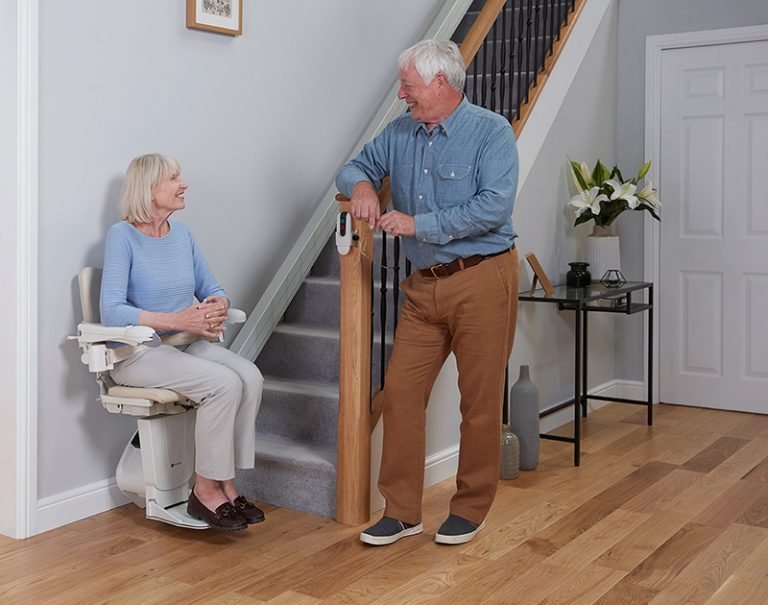
Why Stairs Become a Serious Risk as We Age
Stairs are easy to take for granted when you are young and steady on your feet. But as we age, a combination of changes can turn a staircase into a genuine hazard.
Balance and coordination naturally decline over the years. Muscle strength, particularly in the legs, weakens. Joint conditions like arthritis make bending and climbing painful. Eyesight changes can make judging the depth of a step harder. Many older adults also take medications that can cause dizziness or affect blood pressure. Put these together, and an ordinary flight of stairs becomes one of the most dangerous places in the home.
Falls are not a minor concern. For older adults, a fall on the stairs can result in broken hips, fractures, head injuries, and long hospital stays. Beyond the physical harm, a single fall often shatters a person's confidence, leading them to limit their movement, withdraw, and lose independence. Sometimes the fear of falling does as much damage to quality of life as a fall itself.
This is exactly the problem a stairlift solves. It lets your loved one move between floors seated, secure, and completely safe — eliminating the risk entirely.
Signs It May Be Time to Consider a Stairlift
It is not always obvious when the moment has come. Often it builds gradually. Here are some signs that families commonly notice:
- They pause, rest, or seem breathless partway up the stairs
- They grip the banister tightly or use both hands to pull themselves up
- They have started avoiding the upstairs rooms, or sleeping downstairs
- They have had a fall or a near-miss on the stairs
- They seem anxious or hesitant at the top or bottom of the staircase
- A medical condition, surgery, or recovery has reduced their mobility
- You find yourself worrying about them using the stairs when alone
If several of these sound familiar, it is worth opening the conversation sooner rather than later. Acting before a fall happens is always better than reacting after one.
The Benefits of a Stairlift for an Older Person
A stairlift offers far more than just a ride up the stairs. For older adults and their families, the benefits run deep.
Safety and the end of fall risk
The most obvious benefit is the elimination of the fall risk on the stairs. Your loved one travels seated and secured, with no chance of a misstep. For families, this brings enormous peace of mind.
Independence and dignity
A stairlift means your loved one does not have to ask for help every time they want to go upstairs. They keep their freedom, their routine, and their dignity — able to move around their own home whenever they wish.
Staying in the family home
Perhaps the greatest benefit is that a stairlift allows an older person to remain in the home filled with their memories, rather than moving to a single-storey property or a care facility. This is often what older adults want most.
Access to the whole home
Without a stairlift, many older people effectively live in half their house. A stairlift restores access to upstairs bedrooms, bathrooms, and living spaces — the full use of the home they paid for.
Reduced strain on family carers
If family members have been physically helping a loved one up and down the stairs, this carries a real risk of injury to the carer too. A stairlift removes that strain and the worry that goes with it.
Choosing the Right Stairlift for an Elderly Loved One
Not all stairlifts are the same, and the right choice depends on both the staircase and the person. Here are the main things to consider.
Straight or curved staircase
The shape of the staircase determines the basic type of lift. A single straight flight needs a straight stairlift; any bends, landings, or curves require a custom curved stairlift. We explain this fully in our guide on the different types of stairlifts we offer.
Comfort and ease of use
For an older user, comfort matters. Look for a padded, supportive seat, easy-to-use controls (large, simple buttons or a toggle), and a comfortable seat height that makes sitting and standing easier.
Safety features
Prioritise a secure seat belt, safety sensors that stop the lift if there is an obstruction, and a powered swivel seat that turns at the top so your loved one can step off safely onto the landing rather than twisting awkwardly.
Weight capacity
Standard stairlifts suit most users, but heavy-duty models are available for those who need a higher weight capacity. Be honest about requirements so the lift is safe and comfortable.
Battery power for load-shedding
This is especially important in South Africa. Modern stairlifts run on rechargeable batteries, which means they keep working even during load-shedding. Your loved one is never stranded mid-flight or stuck on the wrong floor during an outage.
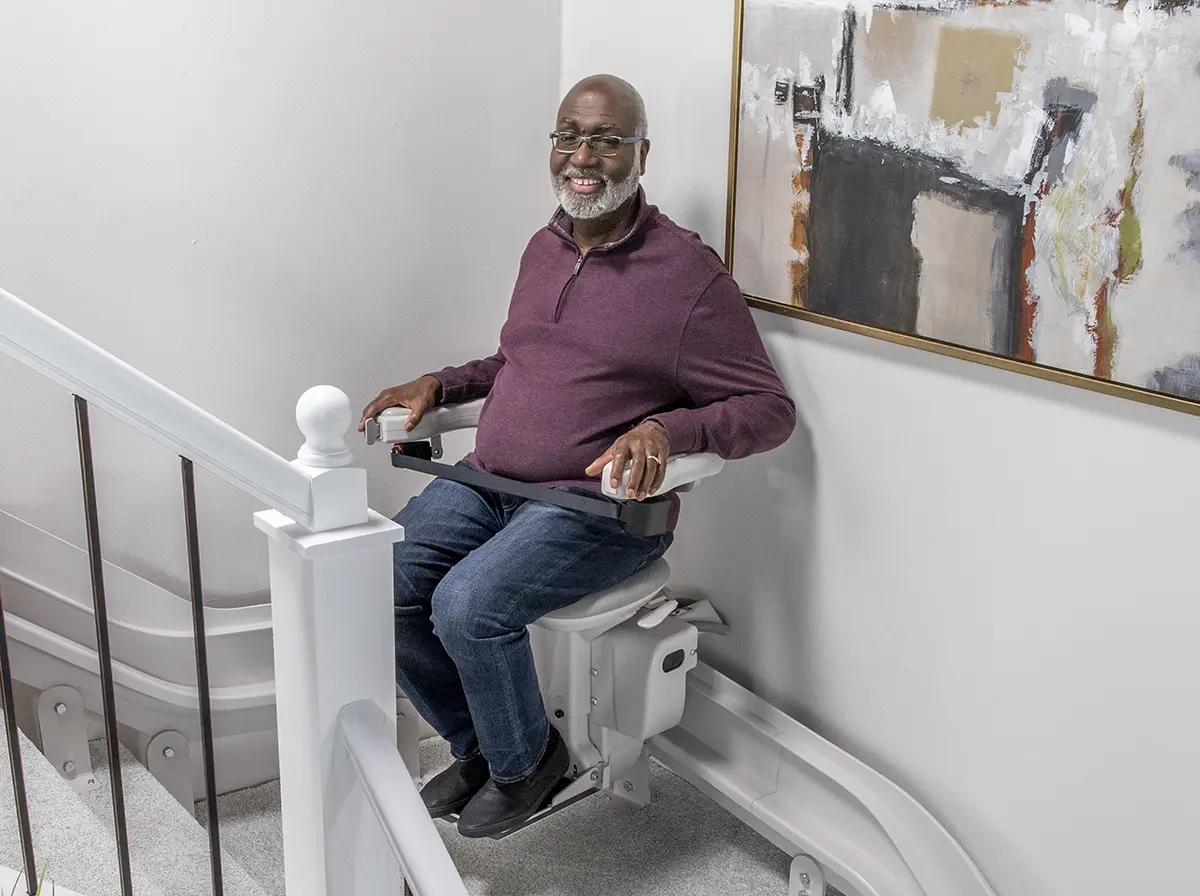
How to Talk to a Parent About Getting a Stairlift
Sometimes the hardest part is not choosing the stairlift — it is raising the subject. Older parents can feel that accepting a stairlift means admitting they are getting frail, and may resist out of pride or fear. Here is how to approach the conversation with care.
- Lead with their independence, not their limitations. Frame it as something that will let them stay in their home and keep their freedom, rather than something that highlights what they can no longer do.
- Listen to their concerns. They may worry about cost, appearance, or what others will think. Acknowledge these feelings rather than dismissing them.
- Share the safety angle gently. You can be honest that you worry about them on the stairs — coming from love, not criticism.
- Involve them in the decision. Let them be part of choosing. People accept change far more readily when they feel in control of it.
- Take the pressure off. Suggest simply getting a free assessment and quote to understand the options, with no obligation to commit.
Patience helps. For many families, the idea needs time to settle. Planting the seed gently and revisiting it is often more effective than pushing for an immediate decision.
What the Process Looks Like
Families are often surprised by how straightforward getting a stairlift is. Here is what to expect:
- Free assessment. A professional visits to measure the staircase and understand the user's needs.
- Quote and recommendation. You receive a clear, itemised quote and advice on the best option.
- Manufacturing (for curved lifts). A custom rail is built to fit the staircase.
- Installation. Trained technicians fit the lift — often within hours for a straight staircase — with no structural damage to the home.
- Demonstration. The user is shown exactly how to operate the lift safely and confidently.
- Aftercare. Ongoing servicing and support keep the lift running reliably.
You can read about the experiences of other South African families on our testimonials page, and find out more about the team on our about us page.
Frequently Asked Questions
Is a stairlift difficult for an elderly person to use?
Not at all. Modern stairlifts are designed for simplicity, with easy controls and a comfortable seat. Most older users feel confident after a short demonstration.
What happens during load-shedding?
Modern stairlifts run on rechargeable batteries, so they continue to work during power outages. Your loved one will not be left stranded.
Will it damage my parent's home?
No. Stairlifts fix to the stair treads, not the walls, so there is no structural damage. The fixing points can be repaired easily if the lift is ever removed.
Can it be installed if my parent has limited mobility right now?
Yes. Features like powered swivel seats, powered footrests, and supportive seating are designed precisely for users with reduced mobility. An assessment will identify the right options.
How quickly can it be installed?
A straight stairlift can often be installed within hours. A curved stairlift takes longer because the rail is custom-made, but installation itself is usually completed in a day.
Final Thoughts: Protecting the People You Love
If you have been worrying about an older loved one and the stairs, that worry is worth acting on. A stairlift is a remarkably simple solution to one of the most serious risks in the home — and it gives back something precious: the ability to stay safe, independent, and at home.
For families, it offers peace of mind that is hard to put a price on. Knowing that a parent or grandparent can move freely and safely around their own home, day or night, is a profound relief.
The best first step is a simple one: a free, no-obligation assessment to understand the options for your loved one's home. There is no pressure and no commitment — just honest, caring advice.
Help your loved one stay safe at home
Book a free, no-obligation assessment and quote. We will recommend the right stairlift for your family's needs — with caring, honest advice.
Get a Free QuoteYou can also browse our range of stairlifts or contact our friendly team to talk through your loved one's situation. We supply and install stairlifts for elderly residents in homes across South Africa.
Stair Lift Chair is a South African supplier and installer of straight, curved, outdoor, and battery-powered stairlifts. Learn more about us.